
Identify a Fulton Property Owner
The address is only a start. In Fulton County, it opens two records. The tax parcel carries the tax-year owner label. A recorded deed then names the grantee, the party who took title, with the ParcelID anchoring the parcel to the tax roll. That comparison keeps an annual assessor field from passing as a real-time title finding.
- Search the street address or PIN in the Fulton County GIS or tax-parcel data. Save the exact
Owner,ParcelID,TaxYearand situs address labels. - Search that owner as a grantee in the Fulton Clerk or GSCCCA real-estate index. Match the legal description, land lot, subdivision, lot, block and parcel clues.
- Check forward for a later deed, correction, tax deed, executor deed, deed of assent or other transfer. Record execution and recording dates.
- If an entity, trust or estate appears, preserve its exact legal name and use the relevant state, probate or deed source. Do not substitute a person without a record.
Start With Fulton Tax Parcels
Fulton publishes parcels through its Open Data Tax Parcels service. The dataset includes an exact Owner field. Mailing fields OwnerAddr1 and OwnerAddr2 sit alongside it. So do situs Address, ParcelID and TaxYear. Together they show who the annual tax file names and where tax mail goes. No field identifies an occupant.
The official parcel service page displays these field names for every parcel query.
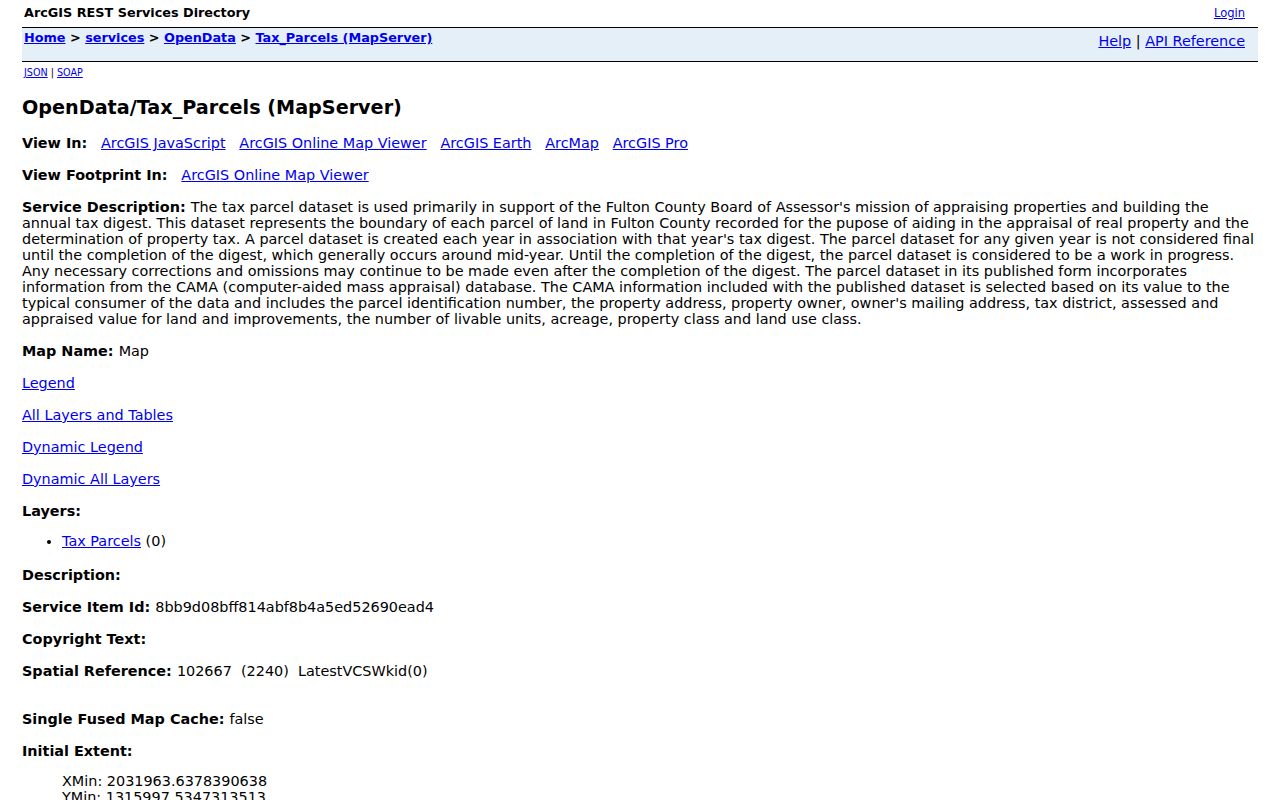
The result fields make this method auditable. Copy the owner name with its tax year. The annual digest gets corrected at times, and a fresh closing may not appear in it at once.
Trace Fulton Ownership to a Deed
The grantee search runs through the GSCCCA Real Estate Property Search. Search the tax-roll owner as grantee there. GSCCCA offers name, property and book-and-page routes. The statewide online baseline reaches back to at least January 1, 1999, though Fulton-specific Good From and Thru dates must be checked in the live portal.
A deed beats an older roll label. Still, open and read any index hit. Similar names, condominium units and entity variants can produce false matches. The legal description, prior deed reference and instrument number tie the right party to the right land.
Where Fulton Ownership Appears
Three county sources can print an owner label. Each serves a different job, so read them together when the question is who owns the property now.
| Source | Owner Info It Gives | Access |
|---|---|---|
| Tax parcel dataset | Owner and mailing labels tied to ParcelID and TaxYear | Public Fulton open data |
| Clerk and GSCCCA deed index | Grantor, grantee, instrument, dates and deed image access | Online index, paid image access, or Deed Room |
| Property Map Viewer | Parcel position and identifiers used to match records | Public interactive map |
| Georgia entity or probate record | Context for an LLC, estate or fiduciary name | Relevant state or court custodian |
The roll's mailing label can point outside Fulton County. That is where notices go. The situs address identifies the land itself, and no field, not even an exemption code, proves who lives there.
Time-Stamp a Fulton Owner Answer
Fulton assessment work uses a January 1 valuation point. It draws on prior-year market data. The digest stays in progress until mid-year. No official source fixes a number of days from closing to an owner-field update, so a sound answer names the tax-roll owner for a stated TaxYear and the recorded grantee on a named instrument, with the date each was checked.
Build a timeline when labels conflict. Track deed execution, deed recording, assessor tax year, notice date and tax-bill date. A mismatch can reflect normal timing, a parcel split, an estate transfer or a data issue. It is not fraud by itself.
Read Fulton Entity Owners Carefully
An LLC, trust, estate, administrator or executor can appear as a printed owner or deed party. Preserve that exact label. For a company, compare the Georgia Secretary of State entity record and the deed. Also check Fulton trade-name or UCC records when relevant. A registered agent serves as the entity's legal contact, not automatically the landowner.
- Owner of record
- The party named by a specified official record at the time that record was made.
- Grantee
- The person or entity receiving an interest in a recorded deed.
- Title
- The legal ownership interest, which requires more than a tax-roll name.
- Situs address
- The physical property location, distinct from the owner's mailing address.
When Fulton Online Search Fails
Fulton Clerk holds physical instruments dating to the early 1800s. The online history is not equally deep. If the portal misses a likely deed, try name variants, book and page, subdivision, lot and block, or land lot and district. The Deed Room computer lab is the next stop. The clerk cannot run title research by phone, though staff can route an identified record request.
Older research continues through Georgia Archives microfilm, Fulton Library directories and Atlanta History Center tax plats or assessor cards. Those sources can surface the right deed-search name. They do not replace the recorded transfer.
Monitor Your Fulton Parcel
Fulton Clerk's R.E.A.A.C.T. sends email or text alerts when a document hits a registered ParcelID. GSCCCA FANS is a statewide alternative. It alerts on user-set name or address criteria. It also draws on clerk-transmitted index data.
Both tools look forward only. They neither hide a public deed nor promise complete, immediate notice. They suit an owner or authorized person watching property, not someone following unrelated people.
Limits of a Fulton Owner Lookup
A tax owner name is not a title search. The named owner may not be the occupant. A deed can convey only the interest the grantor held, and liens, estate proceedings, corrections, court orders and later filings can change the picture. For purchase, boundary or estate decisions, keep the source records and seek qualified title help.
Georgia public-record access allows exemptions and redactions. VoteSafe and other protected-address programs must never be beaten by republishing a residence. Use the least personal detail the lawful question requires.
Lawful use. Fulton owner information supports purchase diligence, estate research and property contact. Never use it to stalk, harass, intimidate or expose a protected address.