
Run a Fulton Property Search
Start with your surest fact. A street address is convenient. An owner name can surface several parcels at once. ParcelID or PIN is the strongest key for moving between Fulton County systems, so the real goal is to establish the parcel first rather than force every source to accept the same query.
- Normalize the street number, direction, name, type, unit, city, and ZIP.
- Use Fulton GIS or tax-parcel data to capture ParcelID, TaxYear, situs address, and owner label.
- Search the newest plausible grantee through the Clerk or GSCCCA and compare the legal description.
- Carry the ParcelID to tax, GIS, and the correct city permit system.
- Save the source, date, filters, result count, and each mismatch.
Keep your original query text handy. Fulton portals may normalize a street or return several parcels under similar labels. Compare geometry, acreage, subdivision, and tax district first. A unit address can point to a parent tract. When that happens, search the recorded condominium plan or subdivision data instead of trusting the first map result. Owner searches deserve the same caution. A shared surname or business name is only a lead until the parcel and deed description match.
Read a Fulton Property Result
A useful result is an inventory, not one name. Grab the parcel key and its date context. Then keep the fields that reproduce the search and connect it to the next official record.
| Parcel identity | ParcelID/PIN, situs address, TaxYear, and tax district |
|---|---|
| Published owner data | Owner label plus separate mailing fields |
| Land clues | Subdivision, lot/block, land lot/district, acreage, and use |
| Value context | Exact land, improvement, total, assessed, or taxable label and year |
| Recorded proof | Grantor, grantee, type, date, and book/page or instrument |
| Spatial context | Parcel geometry and selected layers with query date |
The annual owner field can lag a new deed. State which TaxYear supplied the owner label. Then list the grantee and recording date separately. Value fields deserve their full names too. Land value, improvement value, total fair market value, assessed value, and taxable value are not synonyms. An exemption can change taxable value without touching market value. A prior sale amount belongs to a separate transaction record. Keep those distinctions straight. That stops a compact parcel result from being stretched past what the assessor published.
Choose a Fulton Search Key
Each key solves a different problem. Address finds a known place, owner name may surface several parcels, and ParcelID moves best between records. A Fulton County property search often uses all three.
| Search Key | Best For | Where It Works | Watch Out |
|---|---|---|---|
| Address | One present-day parcel | GIS and tax tools | Units, old street names, postal city |
| Owner name | Parcels tied to a name | Tax data and deed index | Initials, trusts, estates, entity variants |
| ParcelID/PIN | Exact cross-system match | County and city tools | Splits, merges, successor keys |
Not a title search. A parcel row, index hit, and map guide research, but they do not establish clear title or a surveyed boundary.
An old address may need more than new spelling. Use the present parcel to recover the land lot and district. Then compare recorded plats, prior deeds, city directories, and historic maps. A split or consolidation can point to predecessor ParcelIDs. Write down each pivot. A later searcher should see why an address result was accepted or rejected.
Fulton Parcel Search Fields
The Fulton Tax Parcels service publishes ParcelID, TaxYear, Address, Owner, mailing fields, class or use, acreage, exemptions, subdivision clues, and geometry. Think of it as a queryable annual digest. It is not a certified title record. The service page itself displays the field-rich result a searcher uses to move from an address into other records.
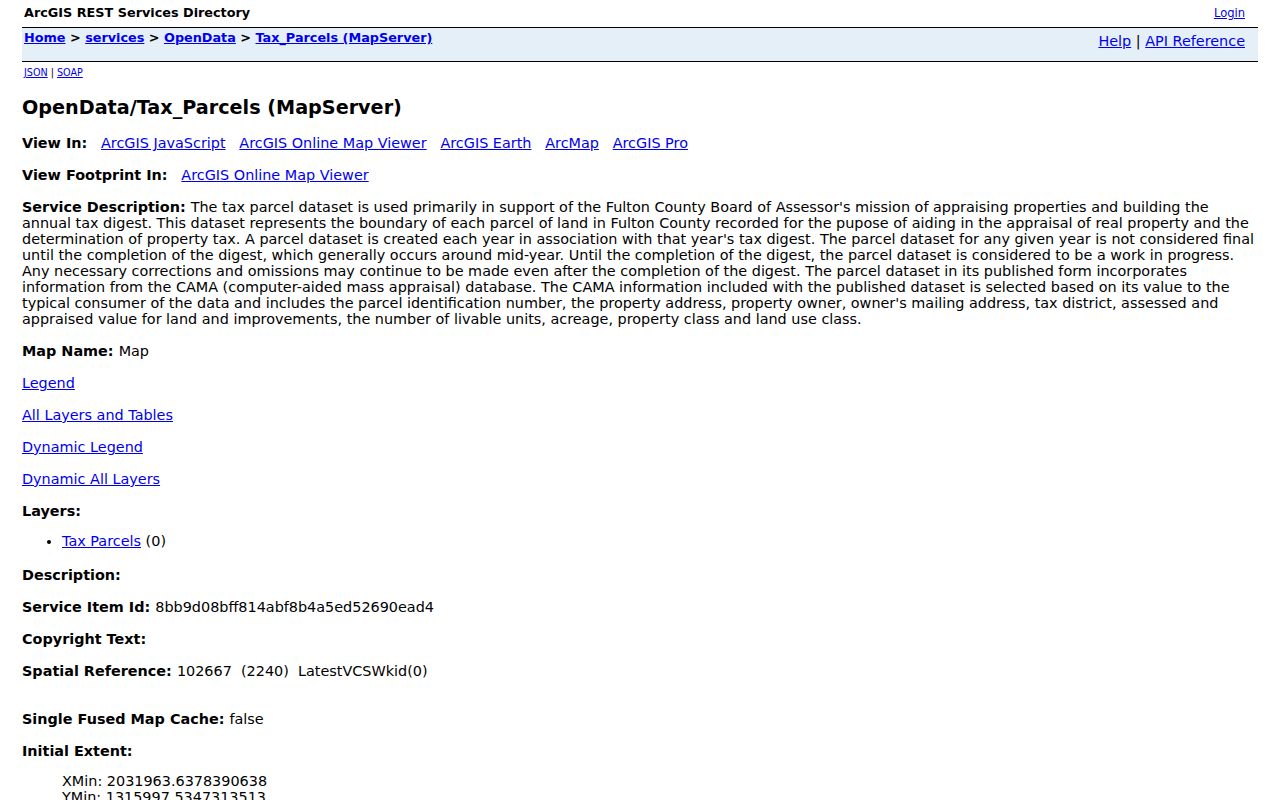
The labels show why ParcelID and TaxYear matter first. Fields like owner, address, and value data all hang on that pair, so save it beside every result.
- ParcelID or PIN
- Fulton's key for a mapped tax parcel.
- Situs address
- The property's location, distinct from an owner mailing address.
- Owner field
- The name published in the annual tax parcel data.
- Recorded grantee
- The party receiving an interest in a filed instrument.
Fulton Deed Property Search
The GSCCCA Real Estate Property Search accepts county, subdivision, unit, block, lot, and date-range controls. Name and Book/Page searches offer other routes. Subdivision mode helps when a street is missing from an old deed. It also tames a common party name. The official screen displays the controls. A Fulton County deed search relies on these.
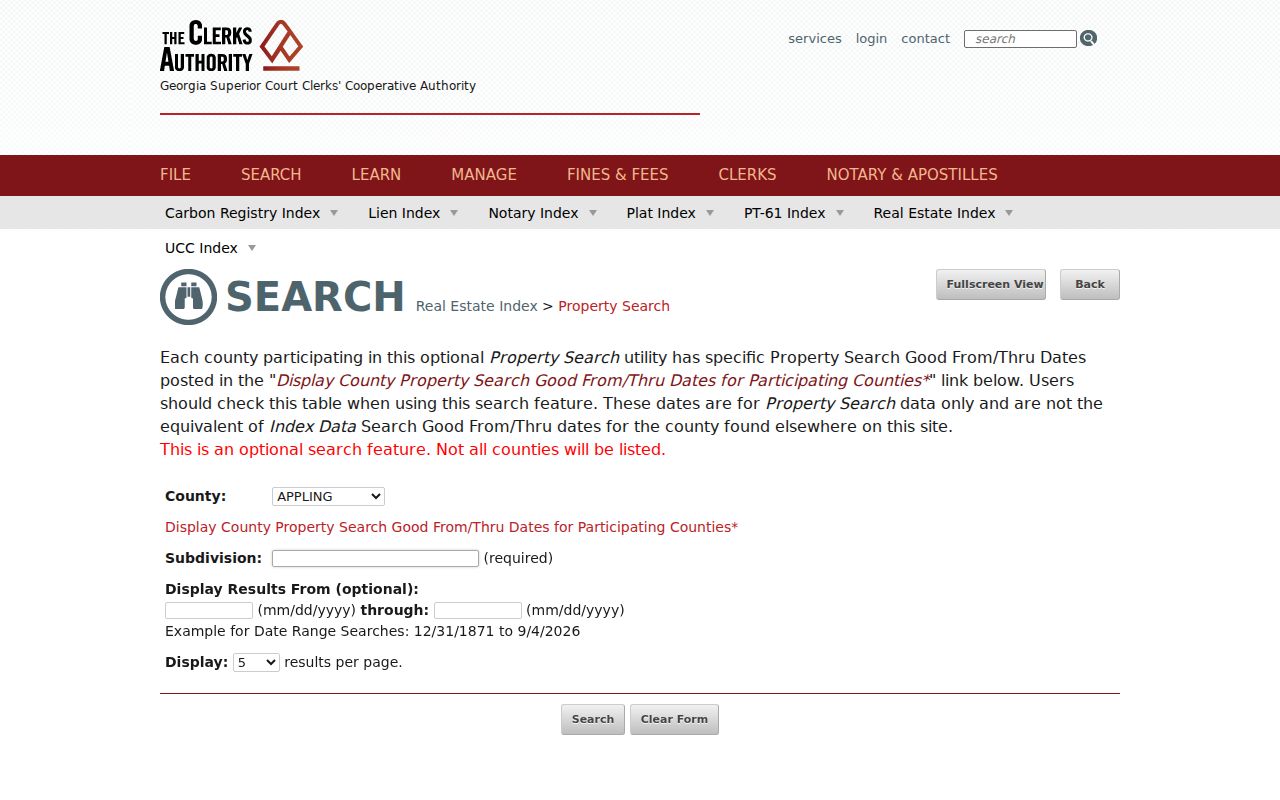
Recording dates and county scope frame the search. Subdivision, unit, block, and lot tie a parcel back to its recorded plat. Remember: index results and document images are separate steps in Fulton County.
Owner Names in Fulton Searches
Names are where most searches wobble. Try the exact legal name first. Then work through initials, suffixes, former names, estate forms, trustee forms, and entity endings in the Fulton County property records. A search log saves you from repeating yourself.
For companies, the Georgia Secretary of State can confirm the legal name and its history. Only a recorded deed, though, proves the link between that entity and the property.
Run both grantor and grantee roles every time. A seller in one deed is often a buyer in an earlier one.
Weigh each plausible hit before trusting it. Recording date, legal description, subdivision, and citation should all line up with the parcel trail.
Match Fulton Property to Its City
Fulton County has no single countywide permit history. The cities hold their own records. Confirm the city limits before you search anything.
Atlanta runs Accela and Property Info. Sandy Springs uses Build Sandy Springs and OpenGov. South Fulton relies on SagesGov. A ZIP code's preferred city label can mislead you, since postal names and incorporated boundaries rarely match.
A city result may list applicant, owner label, contractor, case number, status, inspections, or attachments. Keep those labels exactly as written. Remember two limits here. A permit applicant is not always the tax owner or recorded grantee, and a submitted record does not prove the work was ever finished.
Repair a Failed Fulton Search
A failed Fulton County property search is rarely a dead end. A wrong jurisdiction can mask a record that exists. An address format mismatch, a recent parcel split, or a name variant can too. So can a date cutoff, an account gate, a missing image, or a predecessor agency. Report honestly. Say nothing turned up in the source and date range you inspected. Do not claim no record exists.
Retry with better anchors. A PIN, book and page, subdivision, lot and block can crack a stubborn search. So can both deed-party roles, an entity or estate name, an old address, or even a neighboring parcel.
Still nothing? Escalate. The Clerk Deed Room, the assessor, and the Tax Commissioner each reach records the online property search cannot. So do a city custodian, the library, the archives, or a narrow Georgia Open Records Act request.
Note: Save the query, filters, search date, result count, and next pivot so the lookup can be repeated.
Fulton Roll Versus Deed Timing
Fulton County runs on two different clocks. The assessment side builds its values from January 1 market conditions and prior-year data. The digest can still shift after its mid-year release. Deeds move on their own schedule, with an execution date and a later recording date. The gap explains a familiar puzzle: the tax roll still lists one name as owner of record while the deed records show a newer grantee already recorded.
No official source publishes a fixed delay between closing and roll update. Log the deed dates. Log the recording citation, TaxYear, owner label, notice date, and source for each check. A mismatch is a lead, not a reason to alter either record.
Fulton Search Access Offline
Not every Fulton County property search happens online. The Clerk's Deed Room at 136 Pryor Street keeps early records. It also has a research computer lab, with a stated charge of $5 for four hours. Staff will route a request but will not run title research by phone. Mail copy requests go smoothest with an exact instrument or book and page citation.
Split the rest by office. The assessor holds parcel, notice, value, exemption, and appeal records. The Tax Commissioner handles bills and payments. For older gaps, the Fulton Library directories, Atlanta History Center tax plats and assessor cards, and Georgia Archives materials cover historic addresses and deeds. To trace instruments further, use Fulton County deed records.
Search Fulton Map Layers
Once the parcel is found, the Property Map Viewer adds spatial context for any Fulton County property search. Its layers include tax parcels, address labels, cadastral notes, land lots, subdivisions, ZIP polygons, zoning, future land use, schools, flood and river context, districts, and roads. Identify the parcel and keep the selected ParcelID. Record only the layers that matter to your question. Any map export should carry the query date, the layer or service name, and the extent.
Remember that map geometry is not a survey. Lines may be generalized or shifted. A visible boundary proves no fence, access right, or easement. Use the geometry to locate a recorded plat, survey, or deed description. When adjacent land matters, define the neighboring parcel set instead of eyeballing it.
Date Every Fulton Search Result
Fulton County records run on several clocks at once. A deed carries execution and recording dates. A tax parcel row has a TaxYear. An appraisal sits in a January 1 valuation frame with a notice date. A tax bill adds its own year, due date, payments, and balance. Permits stack up even more dates, from submission through inspection to closure. Keep the exact field for each result. Do not flatten every event into one vague date.
A short research log pays off. Record the portal URL, the date and time checked, and the exact query and filters. Note the result count, the selected identifier, and the file or image name. Add the next pivot. That discipline matters most when a dynamic page changes. The annual tax roll refreshes, or two agencies show different owner labels for the same parcel.
Get Fulton Records Beyond Screens
Screens do not hold everything. The Clerk's Deed Room supports in-person computer research. Identified deed copies can be requested by instrument number or book and page. Assessor staff answer parcel, value, exemption, notice, appeal, and map questions. The Tax Commissioner covers bills, accounts, payments, delinquency, and certificates. City planning or building offices keep permit and zoning files. Those files never appear in county systems.
A focused request gets better results. State the current and historic address, ParcelID, names and roles, subdivision, lot and block, land lot and district, record type, and date range. Ask for an electronic native file when one exists. Get a cost estimate before any broad retrieval. If a portal shows no attachment, request that specific record. Do not ask an agency to build a new report.
Use Fulton Property Data Lawfully
Lawful use of Fulton County property records is broad. Buyers and sellers rely on them for due diligence. They also support boundary and easement research, assessment review, estate work, property history, and civic oversight. None of that erases privacy. Owner mailing fields, permit contacts, and court or probate data should serve only the narrow property question at hand. Do not republish protected or unnecessary personal details.
Georgia's Open Records Act grants access but also permits exemptions and redactions. An agency does not have to build a new compilation on request. Treat a no-result as a documented search outcome, and attribute any redaction to its custodian. A property search must never be used to stalk, harass, or target a person.
Separate programs do separate jobs. VoteSafe and similar nondisclosure programs protect residence confidentiality, while R.E.A.A.C.T. and FANS are filing-alert tools. An alert does not make a deed private. Address protection is not a title alert. Respect each program's limits, and never create an alert for someone else's parcel.
Finally, access is not proof. An index can locate a deed. A screenshot preserves what a portal displayed, and a plain copy documents text. A certified copy carries different status, and a title opinion requires broader legal review. Match the form of the record to the task instead of treating every download as equivalent.